Female travel bloggers now abound on
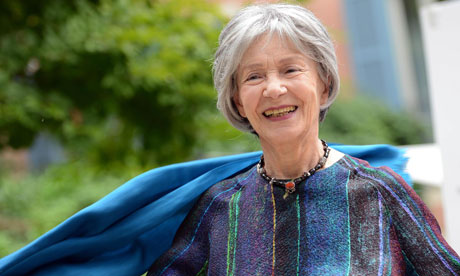
the Internet, but Evelyn Hannon was a pioneer. In 1997 at age 57, she launched journeywoman.com, an online
travel resource just for women. Before then few people acknowledged a simple
fact: Women have different travel concerns from men when traveling solo.

Journeywoman first appeared in print in a mini-magazine Hannon started
in 1994, but the real genesis of the site came in 1982. Hannon and her husband
recently had been divorced. They had fallen in love at 14, married at 19 --
“Way too young,” she says now – and had
two children. At 42, they knew they were going in different directions and had
agreed to an amicable parting.
They
would remain friends, but the pain of breaking that tie was “incredibly distressing,”
says Hannon. “I felt that I had to go into the world by myself.”
She took a trip to Europe – alone.
That solo journey would be the seed that would grow into Hannon’s late-blooming
career as a travel writer and Journeywoman.
 |
| Evelyn Hannon |
As a writer, Hannon has had plenty of life experiences to tap into. During her marriage, she founded and operated a children's camp, worked at a recreational center for older adults and launched a company called Sorties that took older adults on trips to North America. After her divorce, she went back to school to study film and television. At 49, she got a grant to go to China to do research for a film on the way women do traditional Chinese medicine. In her fifties, she moved to Toronto where she started journeywoman.com. On her 65th birthday, she celebrated by running in a 10K race.
Now 73, Hannon isn’t ready to slow down yet. Dubbed the
Grandmother of Women's Travel (and now a real grandmother of four), she still
manages (with only the help of a webmistress) her far-reaching network of
female travelers (the website gets one million visitors a year) who keep each
other informed and sometimes even meet up with each other in various parts of
the globe. The site is peppered with good advice and articles written by contributors
about their experiences. Hannon writes about her own travel adventures like the
time she traveled to China with her daughter Leslie when she adopted a Chinese
baby named Lotus.
 |
| Graphic from journeywoman.com |
Hannon tweets several times a day to her more than 22,000 followers on
Twitter and writes a weekly blog – “Aging Disgracefully” – that appears on
YummyMummyClub.ca, a website founded by her other daughter, Erica.
This week, I caught up with Hannon by telephone at her home in Toronto.
The following is an edited transcript of our chat:
Creativity and travel have a lot
in common. Both involve a certain amount of risk and putting yourself out
there. How has aging changed your approach to your creative life as a travel
writer and your actual traveling?
As I get older, I get bolder. At this point I’m
73 years old and I pretty well speak my mind. I’m not afraid anymore. I’m not
afraid to approach people. I’m not afraid to be playful. You know that whole
thing about “when I get older, I’ll wear a purple hat.” Things don’t embarrass
you and you know that you have the expertise and people know you are not just
fooling around.
You talk with
admiration about your mother as someone who knew how to grow old gracefully.
But your blog is called Aging Disgracefully.
That’s right. My
mother was an absolutely lady. I am a maverick. I don’t think anybody can
accuse me of not being a lady. I’m
never rude. I’m friendly. But my mother was a very sophisticated lady. I am a funky lady. I’m aging
disgracefully -- doing it a little
differently than people expect.
You started
Journeywoman at age 57. What are the advantages to starting a project later
in life and what are the disadvantages?
 I don’t think
there are any disadvantages at all. The career moves that I had had in place
before I started this company all gave me terrific background and access in
order to create the new one. So I
was bringing forward all this lovely experience. I was saavy enough at that
point. I had business acumen. Yeah,
it was perfect. I think that your excitement when you’re older is so much more
because you understand that you are taking this on because you really really
love the idea.
I don’t think
there are any disadvantages at all. The career moves that I had had in place
before I started this company all gave me terrific background and access in
order to create the new one. So I
was bringing forward all this lovely experience. I was saavy enough at that
point. I had business acumen. Yeah,
it was perfect. I think that your excitement when you’re older is so much more
because you understand that you are taking this on because you really really
love the idea.
What was your first travel piece
about?
My first travel
piece was about Amsterdam. I didn’t really know how to do any of this then. So
I cold call the Netherland Board of Tourism and said, “Hello. My name is Evelyn
Hannon. I am going to be the first Canadian woman to start write about travel
from a woman’s point of view and I’d like you to send me to Holland.” There was
silence at the other end and then a woman said, “Evelyn, who are you? That’s
not how you get assignments. Would you like me to explain how you do it?” I eventually faxed her a letter of
introduction and at the bottom of the letter I wrote: “Remember I’m a
Journeywoman. My bags are always packed.” Four days later, the phone rang:
“Evelyn, is your bag really packed? One of the journalists on our press trip
just called to cancel, would you like to replace him?” That was my first travel
story. It got incredible coverage. It was the first time someone had written a
piece that said, “This is how you look at Amsterdam from a woman’s point of
view.”
In your piece Girl With a Grandmother Face, you
describe your grandchildren’s negative reactions to your wrinkles. To counter
that, because they called you old and weak, you challenged them to an arm
wrestling match, which, of course, you eventually let them win. What can we do
to change our society’s negative views of “girls with grandmother faces”? Or it
up to us? Do we need to change attitudes out there or do we need to change
attitudes within ourselves?
 |
| Graphic from journeywoman.com |
The concept of
aging and of grandmother sitting in her rocking chair and knitting and all of
the stereotypes are still in books. But our generation is slowly changing that.
We’re living longer. We’re healthier. Many, many of us are single and therefore
are working longer and choosing to work longer because it’s our way of being
out in the world. I think we’re changing attitudes without really understanding
that it’s happening. There are too many of us not to be changing the concept.
Just by what we’re doing. I don’t think there’s a fight. When I meet up with
younger travel bloggers, everyone is excited to see Journeywoman because I was
the first one to start travel writing from a woman’s point of view. But when
kids who are 40 years younger than I am say they cannot believe that I am 73
years old, I say, “Why? Age doesn’t have to do with your face. It has to do
with what’s going on in your heart. It has to do with your spirit.” I think
there are way more of us with that gumption, with that spirit than ever before.
At 68 you joined 750
students and a dozen 50 plus lifelong learners for a 108 day voyage around the
world with Semester at Sea. What did the younger students teach the elders on
that trip?
The energy. The excitement.
The creativity. The crackling in the air because they were always so curious
and wanting to change the world: It just invigorates you to be around that kind
of energy. That’s what they taught me: Just get out there and try.
Some of the older
people tried skydiving because all the other kids were doing it.
What did the younger students learn from
you?
 I was only supposed
to be on that trip for half the time. I had done some mentoring on board and given a few lectures.
But when the kids learned I was getting off – six weeks into the journey -- they
told me that they didn’t want me to go. “My cabin is being taken over by
someone else,” I told them. “That was the contract.” Then one young woman, a
medical student, came to me and said, “I’m not letting you go. I have a cabin
with an extra bed and I want you to stay with me.” “It’s such a delight to have
this invitation,” I told her, “but it’s going to be like having your
grandmother in your room. Why don’t I just stay for one more port.” She said,
“If you don’t stay for the whole trip, I’m not inviting you.” So I stayed. Oh,
the fun we had. They just took me in. Nobody cared how old I was.
I was only supposed
to be on that trip for half the time. I had done some mentoring on board and given a few lectures.
But when the kids learned I was getting off – six weeks into the journey -- they
told me that they didn’t want me to go. “My cabin is being taken over by
someone else,” I told them. “That was the contract.” Then one young woman, a
medical student, came to me and said, “I’m not letting you go. I have a cabin
with an extra bed and I want you to stay with me.” “It’s such a delight to have
this invitation,” I told her, “but it’s going to be like having your
grandmother in your room. Why don’t I just stay for one more port.” She said,
“If you don’t stay for the whole trip, I’m not inviting you.” So I stayed. Oh,
the fun we had. They just took me in. Nobody cared how old I was.
I have noticed that
the eligible ages for senior discounts vary wildly – ranging from 55 years
on up to 70. Is that an example of society’s unwillingness to deal with age or
is it a good thing that we don’t have a set idea of when old age begins?
 We have young…why
shouldn’t we have old? But old has so many layers. It’s like the Eskimos who
have many names for snow. There are so many interpretations of what old is. I
think we can say what retirement age is – as long as it’s not mandatory. We can
give people the option of stopping their profession at a certain time and
collecting their pension, if they choose to. But in terms of society deciding
what’s old is. No.
We have young…why
shouldn’t we have old? But old has so many layers. It’s like the Eskimos who
have many names for snow. There are so many interpretations of what old is. I
think we can say what retirement age is – as long as it’s not mandatory. We can
give people the option of stopping their profession at a certain time and
collecting their pension, if they choose to. But in terms of society deciding
what’s old is. No.
What is the age of
your oldest contributor?
I don’t know. So many of
them are just a name. They send in their tips from all around the world. We
have a deal. I don’t charge anything for my newsletters, but everybody who
receives them needs to be prepared to send me one tip a year. That’s all I ask.
And it’s amazing. This network is like the Little Engine That Could. And they
just keep sending in their stuff.
Have you ever thought
about writing a travel memoir?
I can’t wait to put my story down on paper. But I’m waiting
until I retire. I am so busy. I wake up at 5 a.m. and I force myself to stay in
bed until 7 but for those two hours my mind is racing about everything that needs
to be done. Because it really is more work than one person should be handling. I’m
also blogging. I’m the resident grandmother on my daughter’s website, which incidentally
just won a Digi award, the Oscar of the digital world. Then trying to be a good
grandmother. And people are always calling me to ask me to give a post on this
or that. I finally have gotten to the point of saying, if it’s a paid position,
yes I will do it. But I can no longer do it complimentary. It’s too much for
me.
Wife, mother, business woman, divorcee, solo traveler, filmmaker, grandmother, travel writer, Internet personality, teacher, blogger, tweeter, Journeywoman: Evelyn, who are you?
Every seven years, I
kind of change. You know what drives me? I take on things that I know nothing
about. I’m an absolute novice. I work at it until I perfect it in some way and
get some recognition or an award or whatever and then I close the door and I say,
okay I know how to do that. Life is short. I want to learn how to do something else.
So are you due for another
reinvention?
No. Journeywoman, it’s my love. I found my
love.