Showing posts with label Jack Kerouac. Show all posts

Wednesday, October 27, 2021

Ghost Stories in the Time of COVID

After months of living with a pandemic, you would think I would have had enough of being scared – but I’m a sucker for ghost stories. Not horror tales (they scare me too much) but stories with a touch of the supernatural that can be both cathartic (misery loves company) and thought-provoking (just what happens to us after we die?).

Literature has always been full of ghosts. Some, like Hamlet's father, actually show up. Some like the ghosts in Henry James Turn of the Screw may or may not be real. And others, like Rebecca in Daphne du Maurier's gothic novel by that name, never do show up but certainly have an unsettling impact. One of my favorite novels is all about ghosts: George Saunders Lincoln at the Bardo which tells the stories of those, including Abraham Lincoln's young son Willie who died of typhoid fever, who are stuck in the bardo, an intermediate stage between life and the afterlife believed by Buddhists.

The pandemic and its heartbreaking losses coupled with so much political uncertainty these days has seemed to increase our interest in the paranormal. 

For his first foray into fiction, Erik Larsen, who is one of my favorite nonfiction writers, has chosen, for example, to write a story about a haunted house. In No One Goes Alone 19th century psychologist William James visits a remote island to investigate a house whose inhabitants mysteriously have disappeared.

On Larsen’s website, he describes the book as “thoroughly grounded in history,” but it is a mixture of fact and fiction. For example, James, of course, is a real historic figure and he was interested in the occult. He co-founded something called the American Society for Psychical Research, which promoted the collection of data on mediumship, telepathy, extra-consciousness and apparitions – and he often collected the data himself. The setting of Larsen’s tale, on the other hand, and the house in No One Goes Alone are entirely Larsen’s inventions.  

No One Goes Alone is available only as an audiobook. Larsen says he did that because he didn’t want to confuse his fans who are used to reading books by him — from The Devil in the White City to The Splendid and the Vile — that read like novels but always scrupulously adhere to facts. He also admits, however, that he chose the audiobook form for this fictional tale because he believes that ghost stories are best told aloud.. . .

Deborah Frethem also appreciates the power of oral storytelling. Thanks to her and her book Ghost Stories of St. Petersburg, Clearwater, and Pinellas County (which I found in the library), I have some good ghost stories to tell that are set right in my own backyard.

 In 2004 Frethem left Minnesota where she had been giving ghost tours to come to Florida to launch Ghost Tours of Tampa Bay. Her friends up north warned her that she wouldn’t find enough ghost stories here to create a tour.


“Well I not only found enough ghost stories to do one tour, I found enough to do four tours, and I
’m finding new stories every day,” she writes in Ghost Stories of St. Petersburg, Clearwater, and Pinellas County, published in 2007. “In fact there are so many stories that there is not even space for half of them in this book.”   

One of the stories Frethem includes in Ghost Stories is about Wilson Hubbard, the father of Captain Mark Hubbard, the person who convinced Frethem to come to Florida to launch Tampa Bay Ghost Tours in the first place.

Wilson Hubbard came to Florida with his parents in 1929 when he was 16. Beginning with five rowboats bought when he was 17, he grew a fishing charter empire. In 1976 he launched Hubbard’s Marina at John’s Pass and in 1979 he opened Madeira Beach’s seafood restaurant Friendly Fisherman (named after one of his boats), legacies carried on by his son Mark (and eventually his grandson Dylan).

After Wilson’s death in 1994, however, his ghostly presence was still felt in the area, Frethem reports, from sightings of the captain at the helm of a boat to the inexplicable rattling of glasses in an area where Hubbard used to keep a rum bottle he used to spike his coffee.

One can only wonder what the ghostly captain thought when in 2019 real estate entrepreneur Ben Mallah bought the whole Marina at John’s Pass for $17.2 million, a price tag that included Hubbard’s Marina and the Friendly Fisherman (as well as a parking garage, two other restaurants and several retail shops).

Frethem tells Hubbard’s story in a chapter entitled Ghosts of John’s Pass, which also includes tales about John Levique, who gave his name to the pass, and ghost stories of pirates who roamed the area in the 18th and 19th centuries.

Many of Frethem’s ghost stories take place at hotels still in operation in St. Pete Beach (Don CeSar), Gulfport (Peninsula), Downtown St. Petersburg (Vinoy) and Safety Harbor (Safety Harbor Resort and Spa). Not all these hotels tout the rumors of their hauntings with the exception of the Don CeSar who gives a nod to the ghost of its founder Thomas Rowe, boasting on its website: “According to local lore, Rowe’s spirit still walks the halls of his beloved Pink Palace.” 

My favorite ghost stories in Frethem's book take place in much humbler and more unusual surroundings for a ghost to hang out – a public toilet and a bookstore, both in downtown St. Petersburg.

The first is a female ghost that presumably haunts Comfort Station Number One, next to the St. Petersburg Museum of History (which Frethem says is haunted by an Egyptian mummy) at the entrance to the city’s Pier. Reports of cold drafts (even on very hot days) and mists on the mirrors on the ladies’ side of the facility are topped by a 1999 sighting by a Wisconsin visitor who claimed she heard a noise in the stall next to hers which she mistook for her sister who had stood vigil outside. “Heather, is that you?” she asked. “No,” said an elderly voice, “it’s Agnes.” When she asked Agnes how long she had been in the city, she replied, “A long, long time.” When she left (after spotting a 1930s-style shoe under the stall), her sister claimed no one had gone in and no one came out while she was doing her business. 

By the way, Frethem debunks the tale often repeated by tour guides here that the Comfort Station was built in the same style as nearby St. Mary’s Catholic Church as a rebuke by the architect because the church had failed to pay him money he was owed. Nice story, says Frethem, but the Comfort Station was built in 1927 two years before the church. Still, the resemblance is striking:

. . Photo by Debora Fretham

    “Comfort Station Number 1”  (Photo by Deborah Frethem) & postcard of St. Mary's Catholic Church nearby
Ghost Stories of St. Petersburg, Clearwater and Pinellas County continues to sell, “even all these years later,” Frethem reported when I reached her via email. “The ghost tours that I used to do in downtown St. Petersburg are still running, but I am no longer involved.” 

She and her husband have been “vagabonds for the past few years, spending time in Philadelphia (one of our sons lives there), the south of France, or wherever the spirit moves us.” 

Now 72 (“but I feel much younger”) and “mostly retired,” she hasn’t given up on ghosts though. In the summers she’s been returning to Minnesota where she runs walking tours in downtown Saint Paul called “Ghosts and Good-time Gals” – half about ghosts and half about the madams and brothels from the 19th and 20th centuries. She’ll be doing her last tour of the season this Halloween weekend.

Does Frethem believe these ghost stories or are they all in fun?

“To be perfectly honest, my passion is not ghosts, although I am a believer,” she writes in Ghost Stories. “My passion is history. But I have found that people are much more interested in hearing history if it contains a good ghost story.” 

Which brings me to my other favorite ghost story from her book which combines history and local legend. The Beat write Jack Kerouac spent his last years in St. Petersburg and he often frequented Haslam's bookstore where he would rearrange his books so they would be at eye level. Kerouac died in St. Petersburg's in 1969 at St. Anthony's Hospital at age 47. Those are the facts of the story. And the legend? According to the staff at Haslam's, reports Frethem, books in the "K" section of the bookstore sometimes mysteriously tumble off the shelves overnight or even during the day. Kerouac, it seems, is still concerned about the placement of his books on the shelves.

Jack Kerouac reportedly called St. Petersburg “the town of the newly wed and the living dead” and said it was “a good place to come to die.”

Apparently, it’s also a good place to haunt.

A version of this story called Haunted Pinellas is also posted at Arts Coast Journal.


. . .


Tuesday, June 5, 2012

TRAVELING NEVER GETS OLD -- AND NEITHER DOES THE TRAVEL MEMOIR. JUST ASK OPRAH.


      Do you have enough travel stories to fill a book? Do you want your grandchildren and great-grandchildren to see the world through your eyes? Do you dream of getting paid to travel? If you said yes to any of these questions, you may be the victim of a highly contagious disease known as the travel writing bug. Don’t be alarmed. There is a cure. Write a travel memoir. 
     People have been travel writing for millennia, beginning with those who recorded their adventures on cave walls. Some merely wrote essays on “What I Did on My Summer Vacation.” Others described deeply spiritual quests... 


    That is beginning of my description of the Travel Memoir class I am offering June 6 on the campus of Eckerd College. It's my first OLLI class.


      OLLI stands for Osher Lifelong Learning Institute. The concept of OLLI is simple: Curiosity never retires. OLLI, which exists on campuses across the country, is a membership organization that offers learning opportunities to midlife and older adults (50 and older, that is). Members pay a small annual fee and then can attend a whole slew of lectures, go on dozens of educational excursions and form special interest groups, all for very reasonable prices. 
     
      In my course description,  I cite two memoirs that have been huge bestsellers: Peter Mayle's A Year in Provence and Elizabeth Gilbert's Eat, Pray, Love. Breezy reads, they are not, I admit, the most adventurous examples of the genre. But wouldn't the bandits, dervishes and idol worshippers in more grittier memoirs, such as Freya Stark's The Valley of the Assassins, have scared people away?
      
        No, it turns out. According to an informal survey I made on Facebook and Twitter, in preparation for the class, the grittier, the better. At least that was the case for those who answered my post, "What Is Your Favorite Travel Memoir?"


       No one who responded even mentioned Eat, Pray, Love. Mindi Dickstein, a lyricist and a librettist who teaches musical theater at New York University, did single out A Year in Provence, but she clearly was far more excited about her other two picks: Bruce Chatwin's The Songlines and David Rieff's Going to Miami (the latter, which details its own version of bandits, dervishes and idol worshippers in Florida, has been called an "anti-traveloque"). She just wasn't certain they qualified as travel memoirs. 

      She needn't have worried. The genre covers a lot of territory. 
    
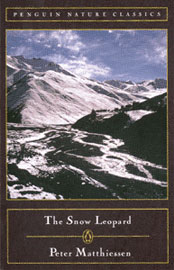
      The titles my social networking friends suggested, in fact, were quite literally all over the map. Susan Farewell, editor-in-chief of FarewellTravels.com, suggested Lawrence Durrell's Bitter Lemons ("really a memoir of Cyprus") as well as Durrell's Spirit of Place: Letters and Essays on Travel. An American expat living in Singapore who tweets @chamorro_chica and blogs at chamorrochica.com offered up Machu My Picchu by Iris Bahr. Barbara Kagan, a graphic designer at Southern Connecticut State University, chose Tony Horwitz's Baghdad Without a Map and Other Misadventures in Arabia. Janet Krietemeyer Keeler, a travel and food editor, confessed her preferences were Nothing to Declare by Mary Morris and Shopping for Buddhas by Jeff Greenwald while her colleague at Tampa Bay Times, Florida culture writer Jeff Klinkenberg, gave a nod to both Bruce Chatwin's In Patagonia and Peter Matthiessen's The Snow Leopard. Everett Potter, publisher of Everett Potter's Travel Report, also tweeted The Snow Leopard as his fav to which travel editor Veronica Stoddart at USA Today replied, "Ditto."


     Minnesota Star Tribune's Laurie Hertzel gave a shout out to all of Eric Newby's books, particularly A Short Walk in the Hindu Kush. Book critic Carole Goldberg (formerly at the Hartford Courant) chose Revolution: The Year I Fell in Love and Went to Join the War by Deb Olin Unferth. One-Minute Book Reviews Jan Harayda recommended A House Somewhere: Tales of Life Abroad, "a collection of 26 essays by (mostly) well known travel writers or journalists on their favorite places," including Tim Parks, Simon Winchester and Frances Mayes. Former National Book Critics Circle president Jane Ciabattari picked On Persephone's Island: A Sicilian Journal by Mary Taylor Smith: "I've reread it many times. Great one!"


       Someone directed me to the London Telegraph's recent list of "20 best travel books of all time." Surprisingly, it includes seven novels: Jack Kerouac's On the Road, Alex Garland's The Beach, Jan Morris' Venice, Ernest Hemingway's The Sun Also Rises, Arundhati Roy's The God of Small Things, Hunter S. Thompson's Fear and Loathing in Las Vegas, and Graham Greene's Our Man in Havana. 


     Can a travel memoir be fiction? I usually think of a memoir as a work of non-fiction, but all of those novels do combine a fierce sense of place with intense personal reflection, a good definition of a travel memoir, I think. Often a sense of place so dominates a fictional narrative that it does feel like a travel memoir. When I go to Paris, for example, I like to bring along the latest mystery by Cara Black. Starring Aimee Leduc, a half American, half French detective, Black's mysteries are set in various quartiers across the City of Lights (Murder in the Marais, Murder in the Latin Quarter) and are chock-a-block with interesting facts and reflections about those neighborhoods. The Venice-based mysteries of Donna Leon (Death at La Fenice) are like that, too.

     Natch, Black answered my question, "What Is Your Favorite Travel Memoir," with a French-drenched title of non-fiction: Almost French by Alexandra Turnbull. An Australian journalist, Turnbull only meant to stay a week in Paris when she agreed to meet her lover there in the mid-1990s. She ended up calling it home. 


       And speaking of home, can a book describing a city where the author grew up still be considered a "travel" memoir?  That latter question was posed by Gina Vivinetto, who teaches creative writing at the University of Tampa. She was thinking of Orhan Pamuk's novel Istanbul.


        Yes, I say, yes! Istanbul is a perfect example of the double nature of the travel memoir as both exterior and interior journey. Pamuk shows us the city that is around him and within him. For me, travel memoirs capture the spirit of a particular time and place but also the transformation of the person who is doing the observing of that time and place. Ultimately, they are descriptions of personal journeys. And what could be more personal a journey than the one taken to discover the place of one's very roots?


       Tame. Gritty. Fiction. Non-fiction. Home. Away from home. So what from all these examples can we conclude makes for a good travel memoir?  
    
       Clearly, the best examples of the genre work on several levels at once. Take The Snow Leopard, the most frequently mentioned title for fav travel memoir in my Facebook and Twitter survey.  In The Snow Leopard, published nearly 40 decades ago, Peter Matthiessen describes a hike he took in the fall of 1973 that took him 250 miles into the heart of the Himalayan region of Dolpo, "the last enclave of pure Tibetan culture on earth." His journey with zoologist George Schaller is purportedly about tracking down the elusive big cat of the title, but through the eyes and pen of Matthiessen, the trip becomes a spiritual quest, a search for nothing short of the meaning of life itself.
     
     Very Buddhist, just like its author.

     Which brings me to Oprah. Oprah, alas, is not one of my Facebook friends or Twitter followers, but in the midst of my researching this topic, she inadvertently answered my question, What Is Your Favorite Travel Memoir?, by choosing one as her first Book Club 2.0 pick:
Wild: From Lost to Found on the Pacific Crest Trail (Oprah's Book Club 2.0)


        Wild: From Lost to Found on the Pacific Crest Trail by Cheryl Strayed. 


        The author of this book has the perfect name for a travel writer. And that's no accident.  In 1995 the author of Wild legally changed her name to Cheryl Strayed, a moniker she chose herself. I was unable to find out what her original name had been, but the change certainly reflects the theme of self-affirmation that has made her memoir a bestseller (and, most likely, is what so attracted Oprah to it).


      Like Matthiessen, Strayed's hike was arduous and challenging. But, again like Matthiessen's lyrical ruminations in The Snow Leopard,  the real story Strayed tells us in Wild is not about the rattlesnakes and black bears, the searing heat and freezing temperatures nor the stunning views and interesting people she meets up with on her 1100-mile solo trek. It's about the inward journey she takes. It's about her discovery of that Buddhist of Buddhist truisms used by Jon Kabut-Zinn for the title of his book on the mindfullness of meditation: "No matter where you go, there you are."
  
       It is what lies at the heart of every great travel memoir and it is why we love to read them. 


       "To awaken quite alone in a strange town is one of the pleasantest sensations in the world," writes Creative Late Bloomer Freya Stark in Baghdad Sketches, one of 30 travel books the intrepid British traveller wrote from age 42 until her death at age 100.  "You have no idea what is in store for you, but you will, if you are wise and know the art of travel, let yourself go on the stream of the unknown and accept whatever comes in the spirit in which the gods may offer it. For this reason your customary thoughts, all except the rarest of your friends, even most of your luggage -- everything, in fact, which belongs to your everyday life, is merely a hindrance. The tourist travels in his own atmosphere like a snail in his shell and stands, as it were, on his own perambulating doorstep to look at the continents of the world. But if you discard all this, and sally forth with a leisurely and blank mind, there is no knowing what may not happen to you."