
Wednesday, March 14, 2012

Friday, February 3, 2012
Madonna Has Nothing on Dorothea Tanning: Reinventing the Creative Life From Age 15 to 101
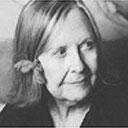
When Dorothea Tanning died this week, at age 101, the New York Times proclaimed: "Surrealist Painter dies at 101."
Too bad the Times didn't have more room in its headline. "Surrealist Painter" doesn't even begin to describe this remarkable woman.
That label, in fact, leaves out the entire second half of Tanning's long, "eventful, capricious and cerebrally screwball life". Surrealism was "a big part of my life," she told Gaby Wood in an interview in the Guardian when her first novel was published seven years ago, "but not all."
Yes, when she died, Dorothea Tanning was the last living member of the surrealist movement. Yes, she was the widow of surrealist painter Max Ernst whom she had married in 1946 in a joint wedding ceremony with surrealist photographer Man Ray and his bride. But Tanning was 45 when she broke away from the surrealist movement. And she was 66 when Ernst died in 1976.
She did a lot of living -- and achieving -- after all that.
 In the mid-1950s, after abandoning surrealism, she turned to abstract painting and developed her own unique style: prismatic paintings like Insomnias (shown at left).
In the '70s, she was making soft, cloth sculptures like the Reclining Nude (shown above), now owned by the Tate Gallery in London.
Tanning never talked art with her famous artist husband, she told Wood in that Guardian interview. "We just had fun. We both had senses of humour, and we enjoyed using them." But when Wood asked her if she felt a kind of artistic liberation after her husband died, Tanning admitted that she "made as much art" after Ernst died as she had during their marriage.

 Tanning, in fact, continued to paint and exhibit and sell her work until her late eighties. She had painted her first painting at age 15. She stopped in 1998 at age 88.
 Then she turned to another creative endeavor: writing.
First poetry. Then a memoir. And finally a novel.
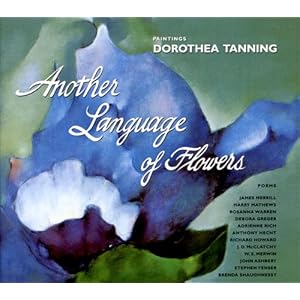 At age 89, Tanning started publishing poetry. In "Another Language of Flowers," Tanning paired each of her last paintings -- 12 large canvases of imaginary flowers -- with a poem by a favorite poet. Within a year, she was publishing her own poems in Poetry, Parnassus, the Paris Review, the New Yorker, Ploughshares and the Yale Review.
 At age 91, she published her second memoir. "Between Lives: An Artist and Her World" expanded on an earlier memoir called "Birthday" (named after her 1942 surrealist self-portrait shown below) that she had published at in 1986.
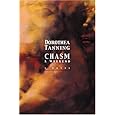
At age 94, she finished her first novel. "Chasm: The Weekend," the story of a little girl and a lion in the Arizona desert. It was published by the feminist UK publisher, Virago in 2004. The Guardian called it "a brilliant debut."
Reinvention? Madonna has nothing on Dorothea Tanning. "She goes out of the room, comes back, and she's someone else -- and after a few hours I think, Phew, that'll do for a while!"

Born and raised in Galesburg, Ill., the daughter of a Swedish born father who was friend's with poet Carl Sandburg, Tanning said her parents were always afraid she would become a "bohemian." No wonder she hated labels. She once said the term "woman artist" disgusted her.
Still, despite all her late-in-life achievements, Tanning knew she would never be able to shake the surrealist label. "I guess I'll be called a surrealist forever," she told Salon in 2002. "...But please don't say I'm carrying the surrealist banner. The movement ended in the 50s and my own work had moved on so far by the 60s that being called a surrealist today makes me feel like a fossil!"
There was though at least one person in her life who refused to reduce her to a single description. Max Ernst, her husband of 30 years, never referred to her as his "wife," she always proudly pointed out. He simply called her "Dorothea Tanning."
Saturday, January 7, 2012
THE PERKS OF MIDDLE AGE
Middle age, it turns out, comes with some awesome perks.
MORE CONFIDENCE: Researchers, like Carol Ryff, the director of the Institute on Aging at the University of Wisconsin, Madison, have found that "while stress reaches a high point in middle age, so does confidence in one's own abilities. By midlife, most people said they felt better equpped to screen out petty annoyances and disappointments and juggle career and family," writes New York Times Patricia Cohen in Get a Midlife.
BETTER SEX: ...at least for women who have told researches that they have greater control over their own sex lives in middle age. "The anxiety-producing pressure from men had eased. They had fewer worries of comtracting sexually transmitted disease and about getting pregnant," Cohen reports.

In Nancy Meyer's 2003 movie "Something's Gotta Give" (see photo at left), the aging Jack Nicholson asks his 50-plus lover Diane Keaton, "What about birth control?" Her answer, Cohen reminds us, is: "Menopause."
INCREASED FINANCIAL SAVVY: The ability to make effective financial decisions may eventually decline as we age, but it is at its peak at mid-life. "Middle-age adults may be at a decision-making sweet spot," concluded economists at the Center for Retirement Research at Boston College in their study of age and financial performance.
And of special interest to CREATIVE late-bloomers:
GREATER ARTISTIC INSIGHT: "Despite the media's obsession with young talent, psychologists like Carl Jung and Erik Erikson maintained that middle age propelled individuals toward their greatest achievements," says Cohen. "Countless writers, filmmakers, musicians, poets and painters have expounded on the artistic insight of midlife."
TIME TO CHANGE DIRECTION: "Middle-aged baby boomers and Gen Xers have something else their forebears did not: more time," concludes Cohen. "With longer life spans, those in midlife have decades to recoup losses and change direction."
In other words, it's never too late to become what you might have been.
MORE CONFIDENCE: Researchers, like Carol Ryff, the director of the Institute on Aging at the University of Wisconsin, Madison, have found that "while stress reaches a high point in middle age, so does confidence in one's own abilities. By midlife, most people said they felt better equpped to screen out petty annoyances and disappointments and juggle career and family," writes New York Times Patricia Cohen in Get a Midlife.
BETTER SEX: ...at least for women who have told researches that they have greater control over their own sex lives in middle age. "The anxiety-producing pressure from men had eased. They had fewer worries of comtracting sexually transmitted disease and about getting pregnant," Cohen reports.
In Nancy Meyer's 2003 movie "Something's Gotta Give" (see photo at left), the aging Jack Nicholson asks his 50-plus lover Diane Keaton, "What about birth control?" Her answer, Cohen reminds us, is: "Menopause."
INCREASED FINANCIAL SAVVY: The ability to make effective financial decisions may eventually decline as we age, but it is at its peak at mid-life. "Middle-age adults may be at a decision-making sweet spot," concluded economists at the Center for Retirement Research at Boston College in their study of age and financial performance.
And of special interest to CREATIVE late-bloomers:
GREATER ARTISTIC INSIGHT: "Despite the media's obsession with young talent, psychologists like Carl Jung and Erik Erikson maintained that middle age propelled individuals toward their greatest achievements," says Cohen. "Countless writers, filmmakers, musicians, poets and painters have expounded on the artistic insight of midlife."
TIME TO CHANGE DIRECTION: "Middle-aged baby boomers and Gen Xers have something else their forebears did not: more time," concludes Cohen. "With longer life spans, those in midlife have decades to recoup losses and change direction."
In other words, it's never too late to become what you might have been.
Subscribe to:
Posts (Atom)