Friday, February 3, 2012

Madonna Has Nothing on Dorothea Tanning: Reinventing the Creative Life From Age 15 to 101

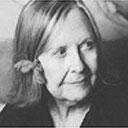
Dorothea Tanning

    When Dorothea Tanning died this week, at age 101, the New York Times proclaimed: "Surrealist Painter dies at 101." 


     Too bad the Times didn't have more room in its headline. "Surrealist Painter" doesn't even begin to describe this remarkable woman.

     That label, in fact, leaves out the entire second half of Tanning's long, "eventful, capricious and cerebrally screwball life".  Surrealism was "a big part of my life," she told Gaby Wood in an interview in the Guardian when her first novel was published seven years ago, "but not all."

     Yes, when she died, Dorothea Tanning was the last living member of the surrealist movement. Yes, she was the widow of surrealist painter Max Ernst whom she had married in 1946 in a joint wedding ceremony with surrealist photographer Man Ray and his bride. But Tanning was 45 when she broke away from the surrealist movement. And she was 66 when Ernst died in 1976. 

    She did a lot of living -- and achieving -- after all that.

     In the mid-1950s, after abandoning surrealism, she turned to abstract painting and developed her own unique style: prismatic paintings like Insomnias (shown at left).


 In the '70s, she was making soft, cloth sculptures like the Reclining Nude (shown above), now owned by the Tate Gallery in London.

      Tanning never talked art with her famous artist husband, she told Wood in that Guardian interview. "We just had fun. We both had senses of humour, and we enjoyed using them." But when Wood asked her if she felt a kind of artistic liberation after her husband died, Tanning admitted that she "made as much art" after Ernst died as she had during their marriage.



Product Details
Product Details     Tanning, in fact, continued to paint and exhibit and sell her work until her late eighties. She had painted her first painting at age 15. She stopped in 1998 at age 88. 

    Then she turned to another creative endeavor: writing. 

    First poetry. Then a memoir. And finally a novel. 
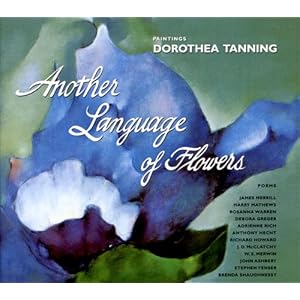


Another Language of Flowers                       At age 89, Tanning started publishing poetry. In  "Another Language of Flowers," Tanning paired each of her last paintings -- 12 large canvases of imaginary flowers -- with a poem by a favorite poet. Within a year, she was publishing her own poems in Poetry, Parnassus, the Paris Review, the New Yorker, Ploughshares and the Yale Review. 
     
                      At age 91, she published her second memoir. "Between Lives: An Artist and Her World" expanded on an earlier memoir called "Birthday" (named after her 1942 surrealist self-portrait shown below) that she had published at in 1986.

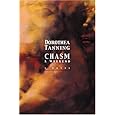
                     At age 94, she finished her first novel. "Chasm: The Weekend," the story of a little girl and a lion in the Arizona desert. It was published by the feminist UK publisher, Virago in 2004. The Guardian called it "a brilliant debut."

                  Also that year, an American publisher, Graywolf Press, issued Tanning's first book of poetry, "
A Table of Content."  "Each word is a deliberate stroke, somehow perfectly right," one critic raved. The book's epigraph reads: "It's hard to be always the same person."
     
              Reinvention? Madonna has nothing on Dorothea Tanning. "She goes out of the room, comes back, and she's someone else -- and after a few hours I think, Phew, that'll do for a while!" 


     Born and raised in Galesburg, Ill., the daughter of a Swedish born father who was friend's with poet Carl Sandburg, Tanning said her parents were always afraid she would become a "bohemian." No wonder she hated labels. She once said the term "woman artist" disgusted her.  

   Still, despite all her late-in-life achievements, Tanning knew she would never be able to shake the surrealist label. "I guess I'll be called a surrealist forever," she told Salon in 2002. "...But please don't say I'm carrying the surrealist banner. The movement ended in the 50s and my own work had moved on so far by the 60s that being called a surrealist today makes me feel like a fossil!"

     There was though at least one person in her life who refused to reduce her to a single description. Max Ernst, her husband of 30 years, never referred to her as his "wife," she always proudly pointed out.  He simply called her "Dorothea Tanning." 


Saturday, January 7, 2012

THE PERKS OF MIDDLE AGE

     Middle age, it turns out, comes with some awesome perks. 


MORE CONFIDENCE: Researchers, like Carol Ryff, the director of the Institute on Aging at the University of Wisconsin, Madison, have found that "while stress reaches a high point in middle age, so does confidence in one's own abilities. By midlife, most people said they felt better equpped to screen out petty annoyances and disappointments and juggle career and family," writes New York Times Patricia Cohen in Get a Midlife.


BETTER SEX: ...at least for women who have told researches that they have greater control over their own sex lives in middle age. "The anxiety-producing pressure from men had eased. They had fewer worries of comtracting sexually transmitted disease and about getting pregnant," Cohen reports. 


In Nancy Meyer's 2003 movie "Something's Gotta Give" (see photo at left), the aging Jack Nicholson asks his 50-plus lover Diane Keaton, "What about birth control?" Her answer, Cohen reminds us, is: "Menopause."


INCREASED FINANCIAL SAVVY: The ability to make effective financial decisions may eventually decline as we age, but it is at its peak at mid-life. "Middle-age adults may be at a decision-making sweet spot," concluded economists at the Center for Retirement Research at Boston College in their study of age and financial performance.


And of special interest to CREATIVE late-bloomers:


GREATER ARTISTIC INSIGHT: "Despite the media's obsession with young talent, psychologists like Carl Jung and Erik Erikson maintained that middle age propelled individuals toward their greatest achievements," says Cohen. "Countless writers, filmmakers, musicians, poets and painters have expounded on the artistic insight of midlife."


TIME TO CHANGE DIRECTION: "Middle-aged baby boomers and Gen Xers have something else their forebears did not: more time," concludes Cohen. "With longer life spans, those in midlife have decades to recoup losses and change direction."


     In other words, it's never too late to become what you might have been.


Sunday, January 1, 2012

THE CREATIVE LATE BLOOMER OF THE YEAR .............(DRUM ROLL, PLEASE): NANCY JENSEN

My pick for Creative Late Bloomer of the Year  is ... 

Nancy Jensen  (pictured at left with her dog Gordy).

She is the youngest of my candidates for the honor (see the list at right), but to me she is the perfect embodiment of what George Eliot meant when she said: "It's Never Too Late to Become What You Might Have Been."

Jensen published her first novel, The Sisters, last year on November 8 -- her 50th birthday. 


The road that brought her to that late-in-life first novel was long and, at times, arduous. She started writing The Sisters in the summer of 2005, when she was 43 going on 44, but her journey to become a writer began long before that.
     
     "I started writing stories almost from the moment I learned to read and write, when I was three going on four," she said in an email to me. "Because I was determined to write instead of wasting my time in college (as I perceived it then), I skipped college, got married, and pretty quickly discovered I knew absolutely nothing and that all my dreams were leaving me behind."

So she changed course and decided to go to college after all. 

    "When i started college at 23, it was with the absolute determination to develop as a writer, and I stayed focused on that, taking every writing course I possibly could, absorbing literature through every pore, and it paid off. Before I graduated, I'd already published a couple of short stories, and I had been accepted into the MFA program at Vermont College. I kept writing, kept having a story here and there picked up for publication, so I was certain I was on my way. I just knew my first book would be out by the time I was 30, and part of my drive came from being angry at myself that I'd wasted 5 years after high school, slowing my progress."


But life intervened to derail her plans.


Due to a personal trauma, she suddenly found herself incapable of writing. She stopped writing entirely. A few years later, still longing to write, she tried again, but, alas, she still couldn't overcome the emotional and psychological block she was experiencing.


     "Writing still felt dangerous, and so again I stopped," she says. "After awhile, I came to believe that whatever I'd once had was gone, and that no matter now much I might want to write, it was too late."


She gave up her dream of being a writer. 

Years later, Jensen met up with an old friend who was very upset to learn that she had stopped writing. The friend gave her a flyer, calling for personal essays from Kentucky women writers.

    "I thanked her but dismissed the idea, and then, as we continued talking, I started telling her about a karate class I'd just started taking," she explains. "When I said, 'I was stunned to discover how much I like to punch and kick,' my friend said, 'That's the first sentence of your essay!'  Truly, it was as if she pulled out the stopper.  When I got home, I started writing, and I wrote almost nonstop for days until I emerged with a first draft of my essay "Blue Belt."  High on that experience, I wrote more essays -- six or seven more -- over the next year or so, and I placed most of them for publication in literary journals.  This new string of publications opened up the opportunity for me to publish my first book, Window: Stories and Essays with Fleur-de-Lis Press.  By the time the deal for the book was settled in 2007 (published in 2009), I'd already started working on The Sisters, but now I hunkered down with even greater resolve."

Her first novel, The Sisters (shown at left), was published four years later.

What advantage does Jensen see in publishing a first novel later in life?
     
     "I'm a vastly different writer than I was in my twenties," she says. " I was enormously impatient then, giving up on pieces if I hit a snag, settling too easily for what would serve rather than what would be best.  In my twenties I believed I was unstoppable, and if you'd told me then I would be fifty when my first novel was published, I might have laughed at you, but secretly I would have despaired, thinking I would rather die than be a debut novelist at that terrible age.  When I came to writing again in my forties, I returned entirely humbled and grateful.  I'm far more patient than I was as a young writer, not embarrassed at all to say that The Sisters took five years to write.  I know now how easily this part of myself can be lost, how I really did almost lose it entirely, so I treasure it more.  In the old days, revision annoyed me and I'd do nearly anything to avoid significant revision to anything I wrote, but now I see revision as time when the real writing happens.

Jensen's novel, the story of how two sisters became tragically estranged, touched me in a very personal way. I have three sisters of my own and I can't imagine what could happen to cause us to cut off communication with each other, why any of us would erase a sister as if she had never existed.  I was fascinated to learn on Jensen's website -- nancyjensen.org -- what had prompted her to imagine such a tale: 

THE TRUE STORY BEHIND THE SISTERS: "When I was about ten or eleven years old, my sister pushed me into our room and whispered that our grandmother, who had been upset all day, had received a letter telling her that her sister was dead. I knew about my grandmother's brothers, but this was the first time I'd ever heard mention of a sister. I tried to ask questions, but my sister shushed me, telling me I must never ask anyone about it -- and especially not Grandma. Later, my mother repeated the same admonition, but I couldn't stop thinking about this estranged sister. Over the years, fragments of the family lore surrounding the sister trickled down to me -- though my grandmother still kept silent. I heard the sister was a tramp and a gold-digger. Sometimes it was implied that this was why she had been cast out of the family, but other times it was suggested she had turned her back on them. I could understand how someone might reject a family member. I could understand how a person might speak badly of the one who had been rejected. But I could not understand, and I could not stop wanting to know, what kind of offense or betrayal could result in one sister's deciding to erase another, as if she had never existed. My grandmother died without sharing the intricacies of her story, so I knew if I was ever going to have an answer to my question, I'd have to write it myself.